


Rhinoplasty in Frankfurt am Main — perfection in form and function


To your desired nose with the unique “Nose by Berkei” technology
One Septoplasty, also called rhinoplasty, is one of the most sought after procedures in aesthetic and functional rhinoplasty. As a central element of the face, the nose shapes the external appearance and decisively influences breathing. A professional Rhinoplasty can sustainably improve beauty and quality of life. In the practice of Dr. Julia Berkei in Frankfurt/Main, located in the exclusive Goethestraße, one of Germany's most renowned luxury shopping streets, patients receive an individually tailored rectification at the highest level. Just a few minutes from the Old Opera, the Römer, the Hauptwache and the Main Tower, the practice offers discretion and accessibility for a Nose surgery in Frankfurt.
With over 27 years of experience and more than 8,000 successful Nose surgery Dr. Berkei achieves natural, long-lasting results. Whether aesthetic Rhinoplasty, nasal septum surgery or complex Revision rhinoplasty — as an expert in Germany, she leads every Nose surgery personally, because precision and experience are essential here.
Reasons for nasal surgery — aesthetics and function in harmony
Many people in Frankfurt opt for a Rhinoplastybecause they are dissatisfied with the shape of their nose or have functional problems such as breathing difficulties. The nose has a significant influence on facial harmony and well-being.
Aesthetic nasal deformities:
- hooked nose: Unevenness or a prominent hump on the bridge of the nose
- Saddle nose: A sunken nose bridge, often in the middle area
- Broad nose/boxer nose: A nose that looks too wide in relation to the face
- Crooked Nose: Asymmetry due to a crooked nose bridge or a curved nasal septum
- bulbous nose: A thickened or bulging nose tip, which is often a Rhinoplasty requires
Medical indications for nasal surgery:
- Chronic breathing problems due to a curved nasal septum (deviated septum) associated with a nasal septum surgery Can be corrected
- Impaired olfactory function
- Recurrent sinus infections
- Enlarged nasal conchae (concha nasalis), which contain too much bone or mucous membrane and block the airways
- Revision rhinoplasty after failed operations elsewhere
Patients often come to Dr. Berkei with results from Turkey, approximately from istanbul, are dissatisfied. Different beauty ideals or language barriers often lead to undesirable results there. With their expertise in Nose surgery and a revision rate of less than 1%, Dr. Berkei offers a solution to such cases through precise rhinoplasty or Revision rhinoplasty to correct. - snoring and breathing in the mouth at night, common cause of lack of oxygen supply during sleep, which can lead to morning exhaustion, concentration problems and daytime sleepiness.
- Chronic nasal respiratory obstruction due to allergies, due to permanently enlarged nasal cavernous bodies (nasal hyperplasia), breathing can be severely impaired, especially in patients with allergic rhinitis, hay fever or dust allergies. Targeted reduction of the nasal concha can help improve breathing and reduce symptoms in the long term.
What is the treatment process for a nose operation with Dr. Berkei and what appointments do I have?
Treatment process:
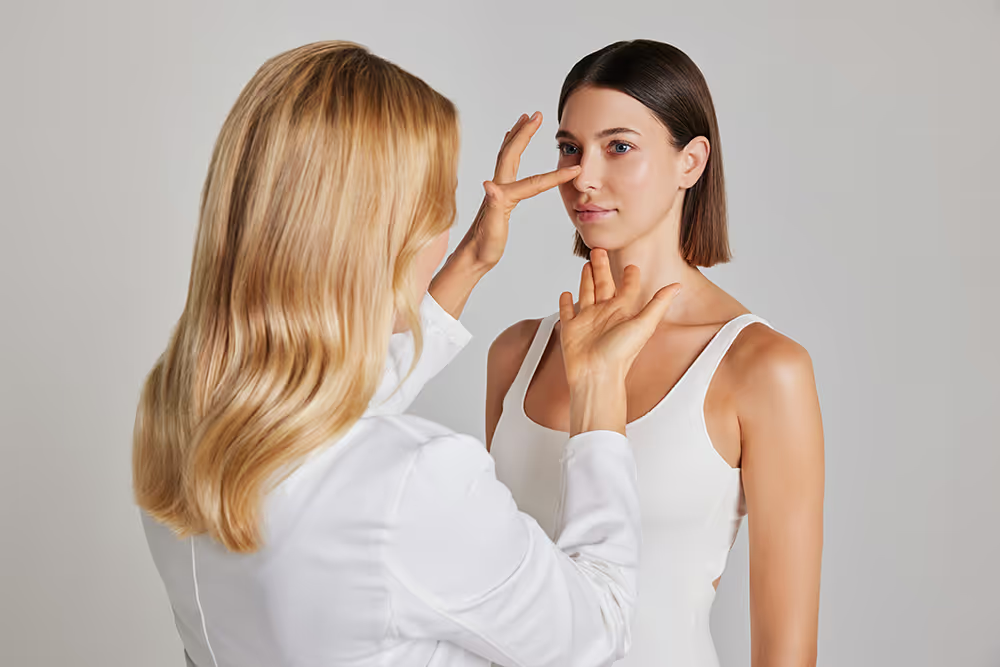
- Consulting & 3D simulation: Dr. Berkei analyses your nose and wishes. Using the latest technology, 3D photos are created that reconstruct your face and show variants of your desired nose. Patients can bring along desired pictures, Dr. Berkei will include them in the Nose surgery She hangs next to the 3D modelling and explains that each nose looks individual.
- registration: Practice management finds the cheapest date, usually Monday to Wednesday.
- Day of operation: The procedure takes 1.5—3 hours under general anesthesia or TIVA (total intravenous anesthesia).
- Visit & dismissal: On the 1st or 2nd day after Nose surgery.
- Check-up dates: Around 6-8 appointments in the first 3 months, more than the market standard of 2-3, for optimal healing.
- Able to work: After about 2-3 weeks.
How does the operation work?
- An existing nasal hump is removed — the consultation will clarify whether the nose bone needs to be broken.
- Functional procedures such as reducing the size of nasal conchae, removal of a septal groin or straightening of the nasal septum (if necessary) for a nasal septum surgery, e.g. for snoring or respiratory problems, combined with aesthetic adjustments. A nasal endoscopic examination, rhinomannometry or, if applicable, CT/DVT clarifies the functional impairment.
- Aesthetic fine-tuning — Dr. Berkei's undisputed eye for aesthetics creates harmony. If the skin is thick, the tip of the nose can be thinned from the inside (up to 2/3) for a Rhinoplasty.
- Stabilization with fine braces from our own cartilage (from the nasal septum). With a Revision rhinoplasty In 90% of cases, stabilizing cartilage is necessary to reshape the bone framework. There are three ways to do this:
- Healthy nasal septum cartilage: If there is enough undamaged cartilage, it is preferred to use it.
- ear cartilage: Dr. Berkei favors ear cartilage because of its good condition and resemblance to nasal cartilage — a precise choice for natural results.
- rib cartilage: More rigid than ear cartilage, poses a risk of pneumothorax and is only used after careful consideration. Patients often come to us with rib cartilage from previous revisions who want further refinement.
Dr. Berkei provides individual advice on which option is best for you and uses her expertise to find the best solution.
What risks and complications can occur?
Each Nose surgery involves risks, but at Dr. Berkei, these are reduced to a minimum through precise techniques, with a revision rate of just 1%. During a consultation, we explain all risks to our patients in detail.
General risks:
- Blood pressure & rebleeding: During the Nose surgery Let us lower blood pressure, if elevated, with very good blood pressure management. Dr. Berkei ends up injecting a powerful local pain reliever so patients wake up pain-free and reduces nosebleeds. Special silicone splints (small tubes) compress the nasal mucosa and reduce the risk of rebleeding.
- blood coagulation: If there is liquid blood, we give an antidote. In advance, we check blood coagulation values to determine whether they are suitable for rectification to ensure.
- wound infection: Thousands of germs in the nose are controlled through continuous disinfection (even during surgery) and IV antibiotics. In addition, we rinse frequently during rhinoplasty.
- Risk of thrombosis: Patients receive a thrombosis shot the night before and an inflatable leg cuff during surgery, which serves as a massage and reduces the risk.
Possible complications:
- Swelling and bruising: Significant in the first 2 weeks, then subsides.
- Mild pain or feeling of tension: Easy to control with painkillers.
- Dryness or mucus production: Temporary.
- Numbness: Usually normalizes within a few months.
- rhinorrhea: secretory discharge after Nose surgery, can last for weeks to months as the secretion can drain off as a result of nasal septum correction; rarely permanently.
- Asymmetries, e.g. nostrils: rare, can be corrected with hyaluronic acid or CO2 fraxel laser.
- Scarring: Extremely rare on the bridge of the nose or tip of the nose, requires clean technology and post-operative treatment. Visible scars on the nasal bridge or wing of the nose very rare, with CO2 fraxel laser treatable.
- Nasal septal perforation: Rare, may affect breathing.
- Open Roof: Common for improper procedures — Dr. Berkei precisely moves bones and stabilizes cartilage to prevent this.
Minor irregularities such as dents, bumps or scar distortions are caused by hyaluronic acid optimized, asymmetries with CO2 fraxel laser improved.
Healing and aftercare
Healing process:
- Thin skin: Up to 1 year, 70—80% of result after 3—4 weeks, swelling minimal.
- Medium-thick skin: 2-3 years, 70% visible after 3-4 weeks
- Thick skin: 4-5 years, 50% after 3-4 weeks Dr. Berkei can thin out the skin of the nose from the inside (up to 2/3) to achieve optimal results even with thick skin.
- Subsequent swelling: For thick skin, this is possible due to water-storing connective tissue, not with thin skin.
Aftercare tips:
- Taping: Very important, especially the first 2 weeks, longer if you have thick skin. Observe strict guidance from Dr. Berkei or the team, as incorrect taping may cause circulatory disorders.
- lymphatic drains: From week 1, 2-3 times a week, ideally with a physiotherapist. Connective tissue massages are recommended after 2 months.
- Massage: After 2 months (with consultation appointment): Knead around the tip of the nose, nostrils and bridge of the nose for 5 minutes, squeeze the bridge of the nose. Encourages circulation and sensitivity, particularly in Revision rhinoplasty after several pre-surgeries.
- Faster decongestor: Protection (3 weeks), taping, cooling (5—7 days), massages (after 6—8 weeks), lymphatic drainage, special cooling solutions (Dr. Berkei Care concept).
Why Dr. Berkei for your nose surgery in Frankfurt?
The surgeon's experience is crucial for a successful Rhinoplasty. Dr. Berkei has as a center for Nose surgery developed an intensive aftercare concept:
- Over 27 years of experience, 8,000+ Nose surgery
- Revision rate below 1% thanks to precise “Nose by Berkei” technology
- Specializing in Revision rhinoplasty — only rejected if the risk is too high (rarely)
- Individual 3D simulation with custom images
- 6-8 follow-up checks for optimal results
FAQ - Frequently asked questions about nasal surgery
What is nasal surgery or rhinoplasty?
One Rhinoplasty, also rhinoplasty This is a surgical procedure that changes the shape, size, or function of the nose. Aesthetically, it can be a hooked nose embellish or functionally with a nasal septum surgery improve breathing. At Dr. Berkei's practice in Frankfurt/Main The “Nose by Berkei” technique is used to ensure natural and stable results.
When is rhinoplasty useful?
One Nose surgery is useful for aesthetic or medical reasons:
- Aesthetic reasons:
- hooked nose: bumps or bumps on the bridge of the nose
- Crooked Nose: Asymmetrical nasal bridge or curved nasal septum
- Saddle nose: Sunken nose bridge
- bulbous nose: Enlarged or bulging nose tip
- Broad nose/boxer nose: Nose that is too wide in relation to the face
- Revision rhinoplasty: Correction after unsuccessful operations, e.g. from Turkey or istanbul
- Functional reasons:
- nasal septum surgery for curvature (deviated septum) with respiratory problems
- Chronic sinus infections
- Sleep problems or snoring due to enlarged nasal conchae
- Reconstruction after accidents
How does a correction work with Dr. Berkei?
- Consulting & 3D simulation: Your wishes are analysed and a 3D visualization shows possible results. Vision ideas flow into the planning of Rhinoplasty one.
- Day of operation: The procedure takes 1.5—3 hours under general anesthesia or TIVA. The “Nose by Berkei” technology guarantees stability and aesthetics.
- Aftercare: First check up the next day, 6-8 appointments in 3 months for optimal healing — more than usual.
Does nose surgery hurt?
Most patients feel pressure rather than pain. Modern techniques and a local pain reliever at the end of rectification keep the feeling of pain low. If needed, there are pain relievers for the first week.
Can I drive a car after rhinoplasty?
No, not for at least 2 weeks. Swelling and the nose splint impair the field of vision, making driving unsafe.
How long does it take to heal after rhinoplasty?
- Swelling and bruising: Significant in the first 2 weeks, then subsides.
- First results: Visible after around 6 weeks.
- Final result: 6-12 months, up to 5 years for thick skin Patience is with everyone rectification important.
What complications can occur during nasal surgery?
Complications are rare with Dr. Berkei (revision rate < 1%), yet there are risks:
- Swelling and bruising: Temporary.
- Numbness: Usually passes within a few months.
- rhinorrhea: secretory discharge, rarely permanent.
- Asymmetries: Can be corrected with hyaluronic acid or CO2 fraxel laser.
- scarring or Open Roof: Rare, avoidable through precise technology.
Regular checks minimize these risks.
When can I start exercising again after rhinoplasty?
Exercise should take a break for 6 weeks to reduce swelling and risks after Nose surgery to reduce. Contact sports such as soccer or boxing only after 3—6 months.
How long do the results of rhinoplasty last?
After healing, the result of rectification durable. The “Nose by Berkei” technique ensures stable, aesthetic results with a revision rate of less than 1%.
How much does nose surgery cost in Frankfurt?
The costs vary depending on the procedure:
- Esthetic Rhinoplasty: Calculated individually.
- nasal septum surgery: Often covered by health insurance when medically necessary.
A cost plan is drawn up during the consultation.
Does health insurance cover the costs of a correction?
Yes, for functional problems such as respiratory obstruction due to a nasal septum surgery. Purely aesthetic Nose surgery are private services. Practice provides support with documentation.
Is it possible to reduce just the tip of the nose?
Yes, one Rhinoplasty is possible, e.g. with a bulbous nose. Dr. Berkei harmoniously adjusts the tip, often by adjusting cartilage or thinning the skin.
Can the nose still swell years after nose surgery?
In the case of thick skin, slight swelling can occur years later, for example due to tissue changes. Larger swellings are due to the healing phase after rectification limited.
How often can revision rhinoplasty be performed?
Each additional Revision rhinoplasty becomes more complex due to scar tissue and lack of cartilage. Dr. Berkei uses ear or rib cartilage and recommends at least 12 months apart from the last Nose surgery.
What should I consider before rhinoplasty?
Bring along ideal pictures, do thorough research and plan aftercare. Dr. Berkei explains realistic results, e.g. with hooked nose, Saddle nose or revisions to Turkey-Interventions.