


NAD+ and Longevity: What the Studies Show




First, you read about it in an interview with a Silicon Valley tech founder. Then, a friend posts about it on Instagram. Next, you see the word on the menu at a wellness lounge in Los Angeles. NAD+ has arrived in the world’s longevity clinics, bringing with it the question of how much is actual science and how much is wishful thinking. We’ll tell you, as honestly as if we were speaking in person.
What exactly is NAD+?
Nicotinamide adenine dinucleotide, or NAD+ for short, is a coenzyme found in almost every cell in the body. Without NAD+, cells cannot generate energy from food. It is particularly essential in the mitochondria, the powerhouses of the cell. Muscles, the brain, and organs require a constant supply.
But the role of NAD+ goes beyond energy metabolism. Sirtuins—enzymes that control cellular stress and are considered "longevity genes" in research—require NAD+ as fuel. The same applies to DNA repair enzymes, which fix tens of thousands of minor genetic defects every day.
In simple terms: NAD+ keeps three fundamental cellular functions running: energy, protection, and repair. This is why longevity research is so intensely focused on this molecule.
Do NAD+ levels drop with age? A myth becomes more nuanced
For a long time, it was considered a fact that NAD+ levels decline continuously with age. This statement can still be found in almost every longevity publication today. However, more recent data forces us to take a more precise view.
Yes, lower NAD+ levels have been repeatedly measured in the brains, skin, and skeletal muscles of older individuals. No, this decline cannot be easily detected in whole blood. Current analyses of several study cohorts show no consistent pattern.
NAD+ is regulated on an organ-specific basis. What is visible in the blood tells us little about the cells in the muscles, brain, or liver.
This does not invalidate NAD+ as a therapeutic target. It simply means that a single blood test does not provide a complete picture. Anyone looking at NAD+ seriously must consider the entire metabolism and the clinical signs of the person sitting in front of them.
What research really shows today
The data is most robust for oral NAD+ precursors. Nicotinamide riboside (NR) occurs naturally in milk, meat, and vegetables; it is highly bioavailable and consistently well-tolerated in clinical studies. A controlled twin study showed increased mitochondrial biogenesis in muscle tissue with NR, a plausible indicator of actual effects on energy metabolism.
For intravenous NAD+, the body of evidence is smaller but growing. The pilot study by Grant et al. (2019) administered 750 mg of NAD+ over six hours and clearly demonstrated that the body absorbs infused NAD+, with measurable changes in blood and urine profiles. Several studies are currently investigating how significantly this impacts energy, focus, or aging processes in the long term.
Our position: NAD+ infusions are a promising component of a modern longevity strategy, not a miracle cure or a guarantee. Anyone promising otherwise is selling hope, not medicine.
A global trend and a healthy scientific debate
NAD+ infusions are now standard at the world’s leading longevity destinations. The NADclinic Group in London specialized early on and built an international network. In Los Angeles, the Beverly Hills Rejuvenation Center and Dr. Ben Talei combine NAD+ with aesthetic and regenerative treatments. The Modern Age Clinic in New York and the Clinique La Prairie on Lake Geneva offer NAD+ protocols as an integral part of their longevity programs.
The field is primarily driven by Harvard geneticist David Sinclair, whose work on sirtuins brought the molecule international attention. Sinclair states that he takes NAD+ precursors daily. He is not without his critics. Charles Brenner, also a renowned NAD+ researcher, publicly disagrees with some of Sinclair’s theses. This discourse is healthy. It shows that the field is engaging in honest self-scrutiny.
Who might benefit from an NAD+ infusion?
We do not recommend NAD+ infusions as a lifestyle treatment. They are a medical tool with a clear area of application. Common indications in our practice:
- Persistent fatigue or reduced performance without a clear cause
- Periods of high physical and mental stress: executives, competitive athletes, family caregivers
- Concentration and memory issues beyond age-related fluctuations
- Increased need for recovery after prolonged illness or infection (including post-COVID)
- Hormonal transition phases, particularly perimenopause
- Metabolic stress during medically supervised weight management
- The desire to support cellular health and healthy aging in a structured and measurable way
How we work
Every NAD+ infusion at the Berkei Longevity Institute follows a fixed, physician-led three-step process.
1. Consultation and assessment
Before any infusion takes place, we talk. We determine whether an NAD+ infusion is appropriate for your specific case based on your medical history and individual health goals. This diligence in separating honest benefits from mere hope is the most important step.
2. Personalized diagnostics
This is followed by indication-based laboratory diagnostics—not a standard package, but targeted tests derived from your findings and specific concerns. Where appropriate, we supplement these with organ-specific markers and functional tests.
3. Individual treatment protocol
Based on this, we determine the dosage and infusion rate, provide medical supervision throughout the treatment, and document the progress and tolerability in detail. There is currently no universally accepted dosage standard for intravenous NAD+. This makes individual titration all the more important.
The Berkei Longevity Institute
In 2026, the Berkei Longevity Institute will open at Große Bockenheimer Straße 43, just a few minutes' walk from the Alte Oper.
With this step, the Berkei Plastic Surgery Clinic is expanding its medical spectrum to include a specialized center for longevity medicine, cellular regeneration, and modern healthy-aging and age-reversing concepts.
The new premises combine modern medical diagnostics with individually developed prevention and regeneration concepts. Molecular and metabolic analyses help to identify health risks in a more nuanced way, make changes measurable over time, and establish a new dimension of preventive longevity medicine in Frankfurt.
Our approach is deliberately medical: to adopt new developments early on without promising more than science can support at any given time.
If you are curious to learn more, we invite you to a personal consultation. Together, we can determine what NAD+ can do for you.
Scientific sources
- Grant R et al., “A Pilot Study Investigating Changes in the Human Plasma and Urine NAD+ Metabolome During a 6 Hour Intravenous Infusion of NAD+”, Frontiers in Aging Neuroscience, 2019.
- Lautrup S et al., “NAD+ in Brain Aging and Neurodegenerative Disorders”, Cell Metabolism, 2019.
We would be happy to share further studies and reviews during a personal consultation.
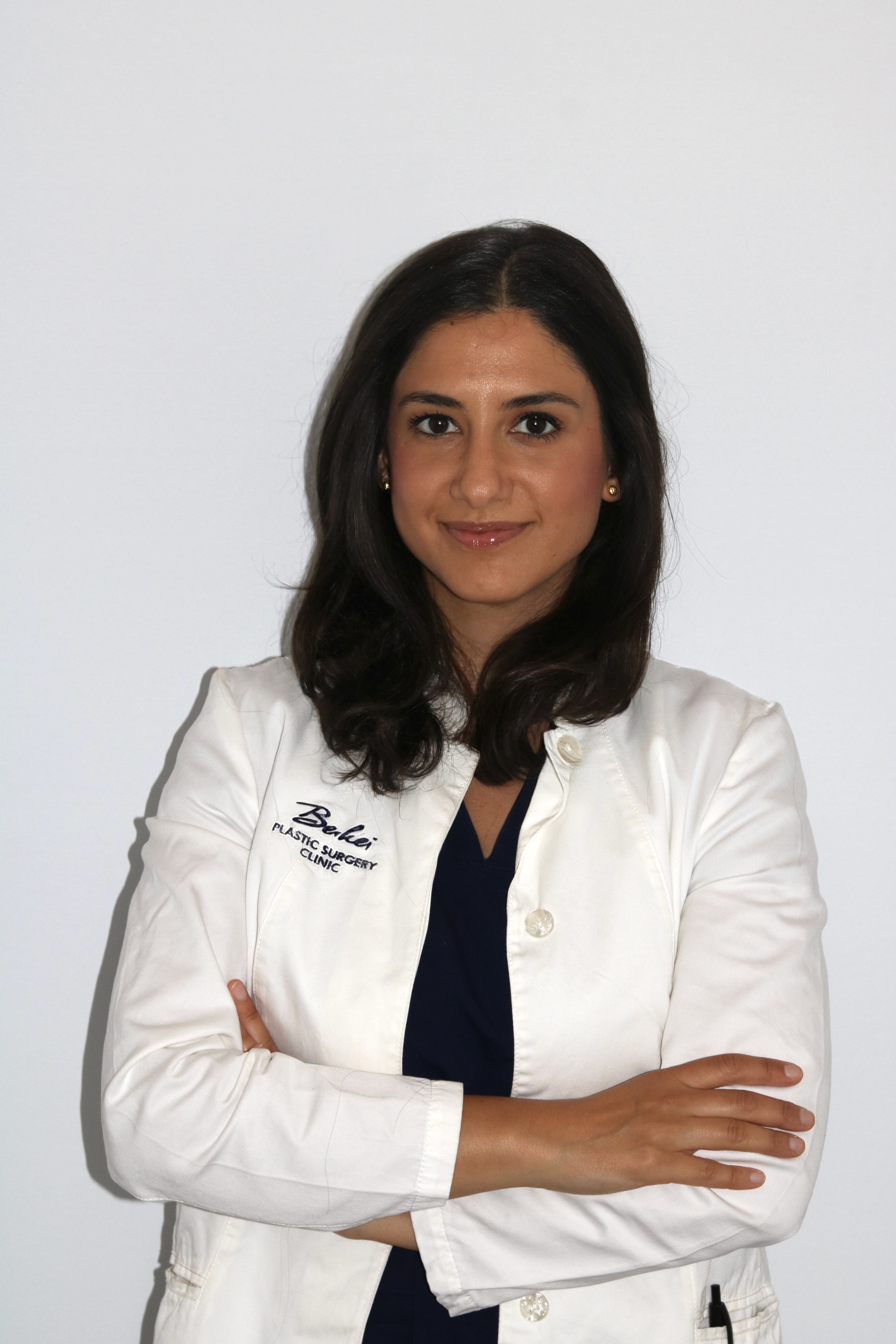
Dr. med. Perihan Gerger
Specialist in Plastic and Aesthetic Surgery
Dr. med. Perihan Gerger is a board certified specialist in plastic and aesthetic surgery. At the Dr. Berkei practice in Frankfurt she focuses on breast and body procedures and the longevity consultation.

-2.png)