



We are your specialists for nose corrections (rhinoplasty) – also for patients from Zurich and the surrounding area. Our practice is centrally located on Bahnhofstrasse 10, just a few minutes’ walk from Lake Zurich.








Functional Nasal Correction in Zurich
Breathe freely again with Dr. Julia Berkei & Team
A permanently restricted nasal airflow can significantly affect quality of life: sleep disturbances, constant mouth breathing, chronic infections, or even reduced performance in sports are common consequences. At our practice in Zurich, we specialize in functional nasal corrections – both for primary concerns and for complex revision procedures.

#1 Expert in Rhinoplasty & Nose Corrections
Dr. Julia Berkei is one of the leading specialists in aesthetic and functional nose corrections. With over 27 years of experience and more than 8,000 successfully performed nose surgeries, she stands for the highest precision, state-of-the-art techniques, and naturally harmonious results. Thanks to her exceptionally low revision rate of under 1% and her individualized “Nose by Berkei” concept, she sets new standards in nasal surgery – even on an international level. At our practice in Zurich, we combine function and aesthetics at the highest level.
What is Rhinoplasty?
Rhinoplasty, also called a nose surgery or nose correction, is a surgical procedure to change the shape, size, or function of the nose.
It can be performed for aesthetic reasons (e.g., to correct a hump, saddle, or crooked nose) as well as to improve nasal breathing in cases of functional problems. With Dr. Berkei’s “Nose by Berkei” technique, both goals are combined: a harmonious facial profile and unobstructed breathing. Each correction is individually planned and carried out using state-of-the-art imaging and surgical techniques, ensuring a stable, natural result.
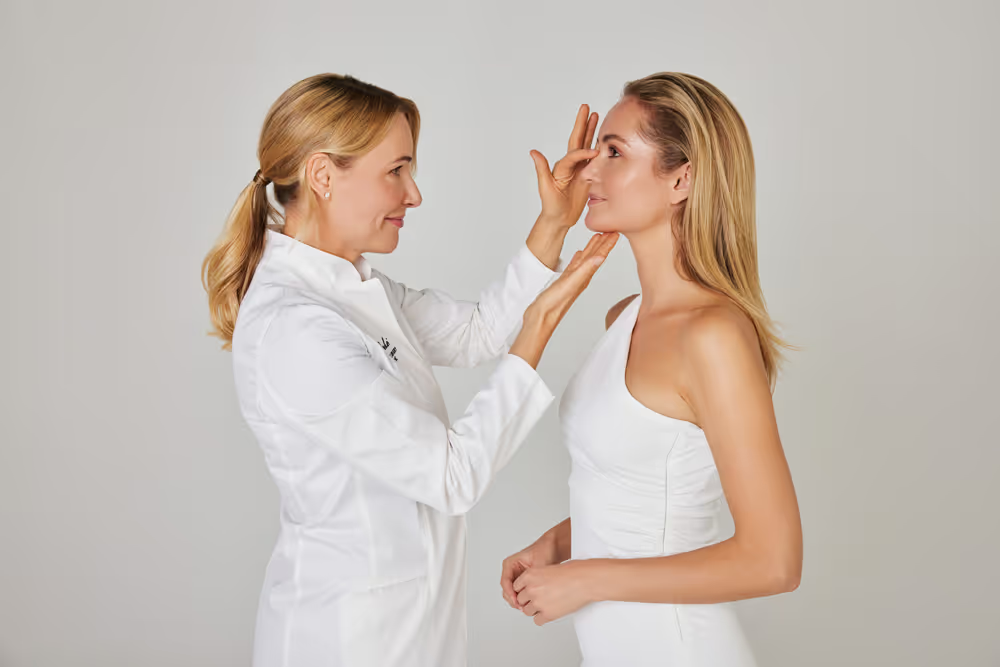
When is a Nose Correction suitable?


Advantages of a Nose Correction

Service Overview: Surgical & Non-Surgical Nose Corrections for Patients from Zurich
Our practice in downtown Zurich offers both classic surgical rhinoplasty and minimally invasive treatments with hyaluronic acid – individually tailored to your anatomical features and aesthetic goals.
Surgical Rhinoplasty
A rhinoplasty, also known as an aesthetic or functional nose correction, is a surgical procedure to change the shape, size, or function of the nose.
Typical areas of treatment:
— Reduction of a nasal hump
— Straightening of a crooked nose
— Refinement of a broad or bulbous nasal tip
— Correction of a saddle nose or sunken nasal bridge
— Resolution of functional issues (e.g., breathing difficulties)

Non-Surgical Nose Correction with Hyaluronic Acid
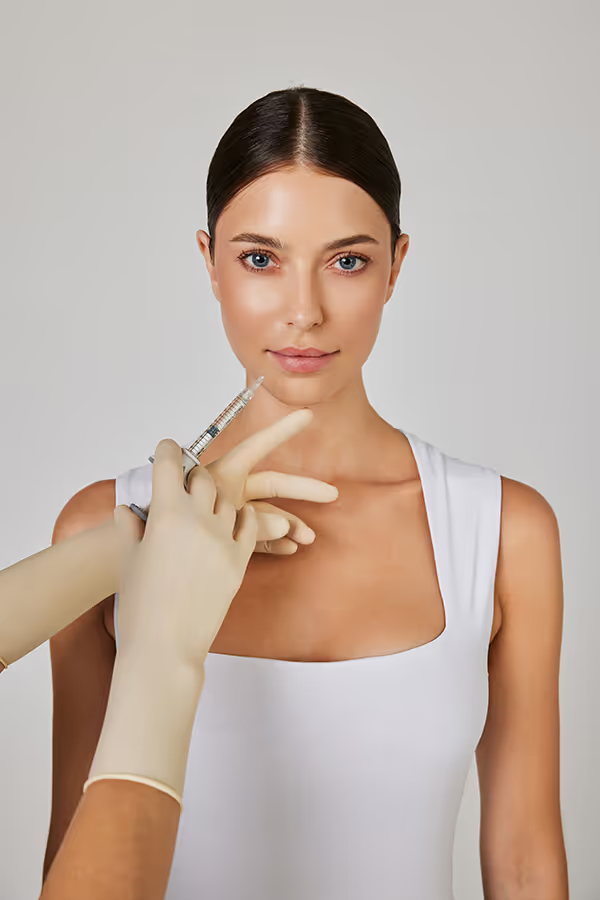
For minor aesthetic corrections, our practice in Zurich, very centrally located at Bahnhofstrasse 10, also offers the so-called “Liquid Nose Job” – a gentle alternative to surgery. In this procedure, specially prepared hyaluronic acid is precisely injected to shape the nose in a targeted way.
Suitable for:
— Concealing minor nasal humps
— Lifting or stabilizing the nasal tip
— Correcting small asymmetries
— Refining the nasal bridge
— Harmonizing proportions between nose, forehead, and chin
The treatment takes only a few minutes, is almost painless, and requires no downtime. Results are visible immediately.
Before-and-After Results & Patient Testimonials
The desire for a nose correction is individual—just like the result. At our practice, we show you meaningful before-and-after photos from our own clinical documentation during a personal consultation.
These images come exclusively from patients who have given their consent for use and are, of course, presented anonymously. This gives you a realistic impression of the changes that are possible through an aesthetic or functional nose surgery. Additionally, many of our patients openly share their experiences with the treatment, care, and results on platforms like Google, Trustpilot, or Jameda. Personal quotes, authentic reviews, and insights via our social media channels complement this picture and provide you with a well-founded orientation.Trust in real results—documented, transparent, and achieved with medical precision.
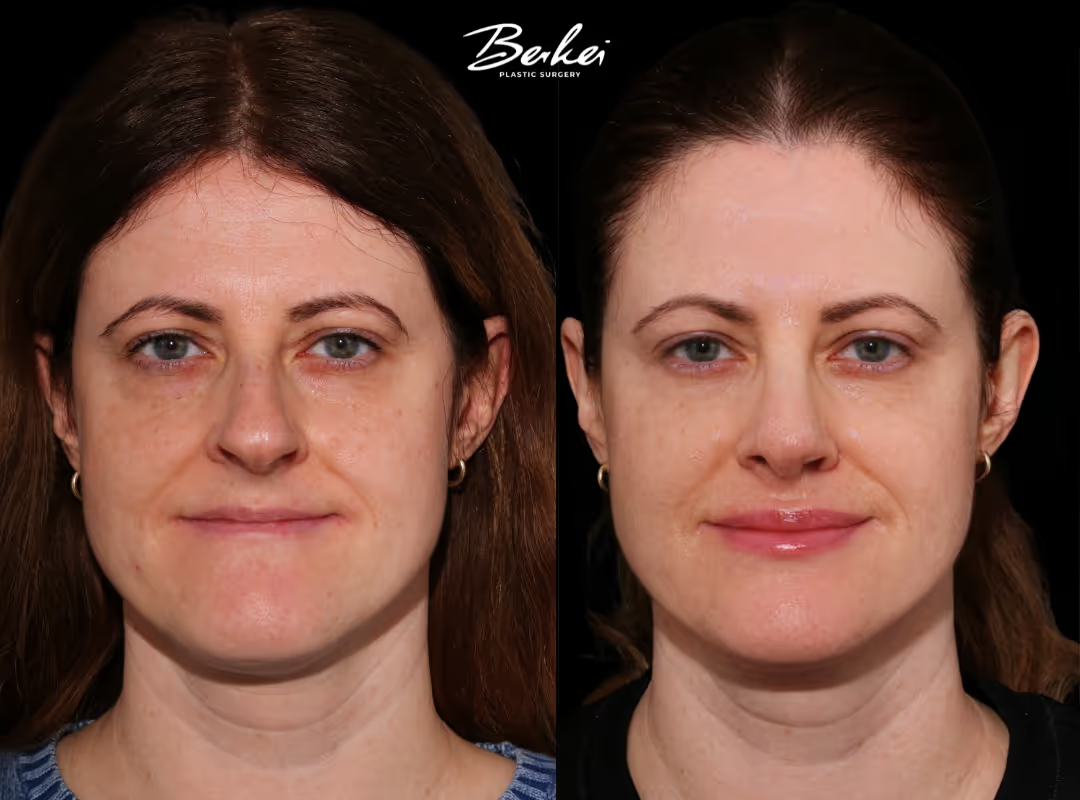
Rhinoplasty with surgery
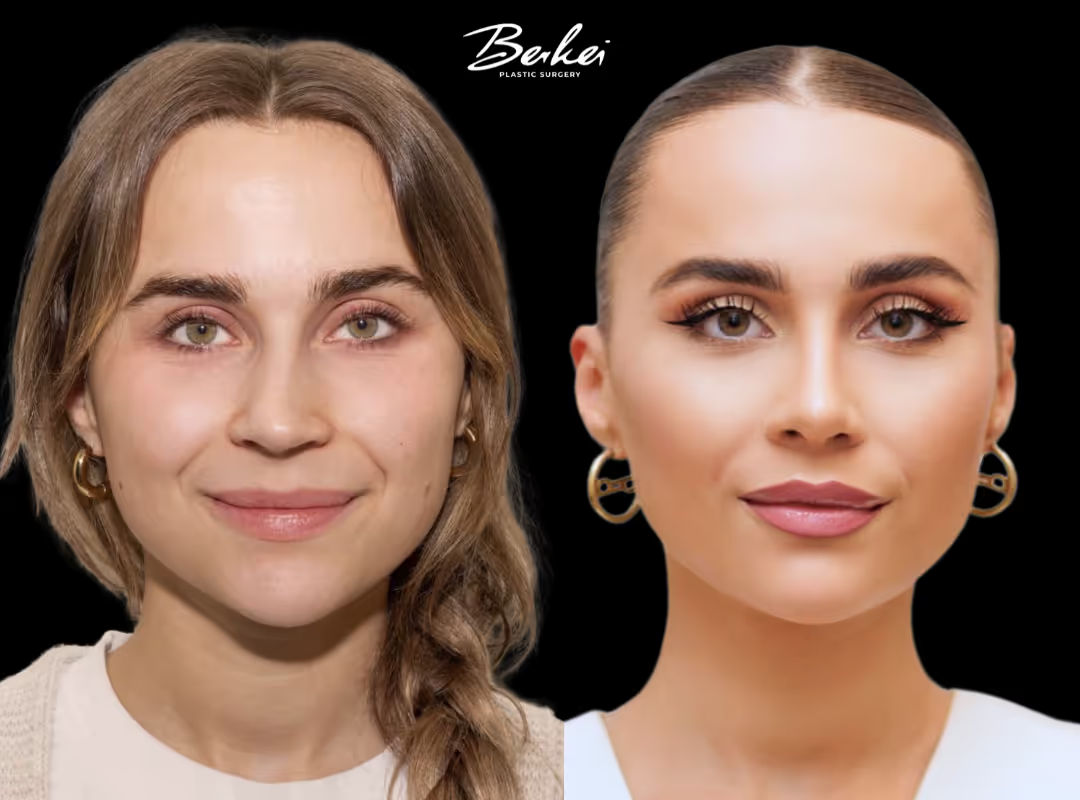
Rhinoplasty with surgery
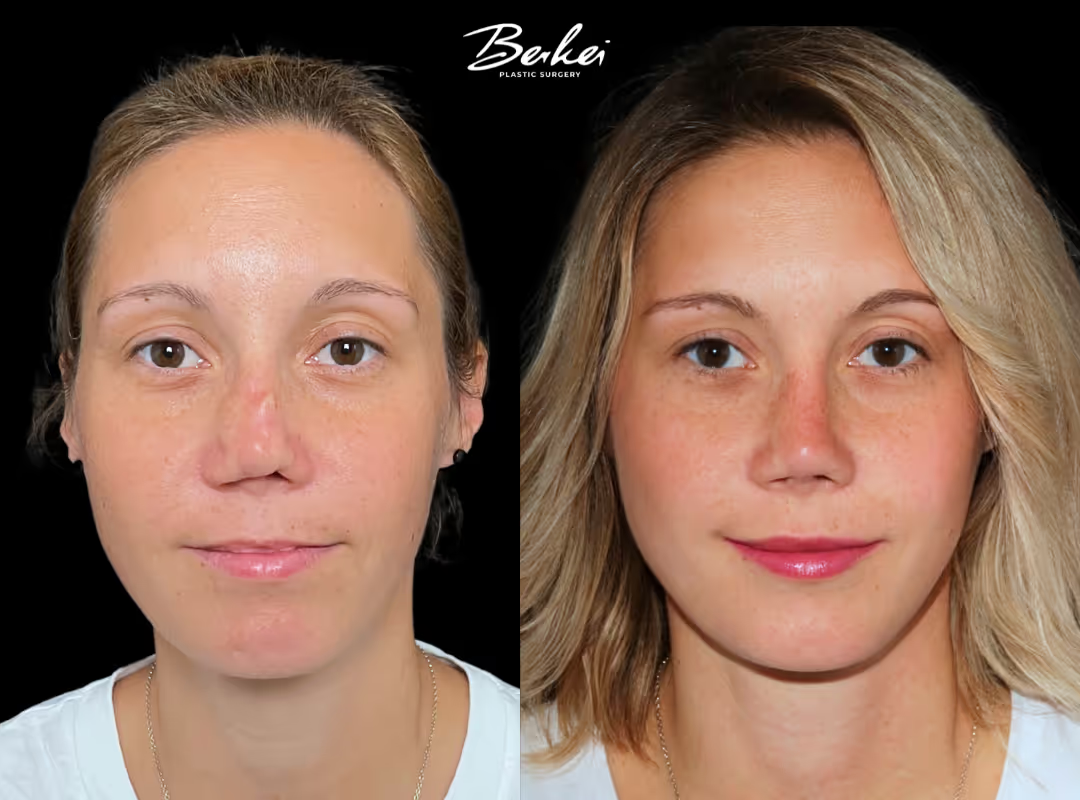
Rhinoplasty with surgery

Revision Rhinoplasty
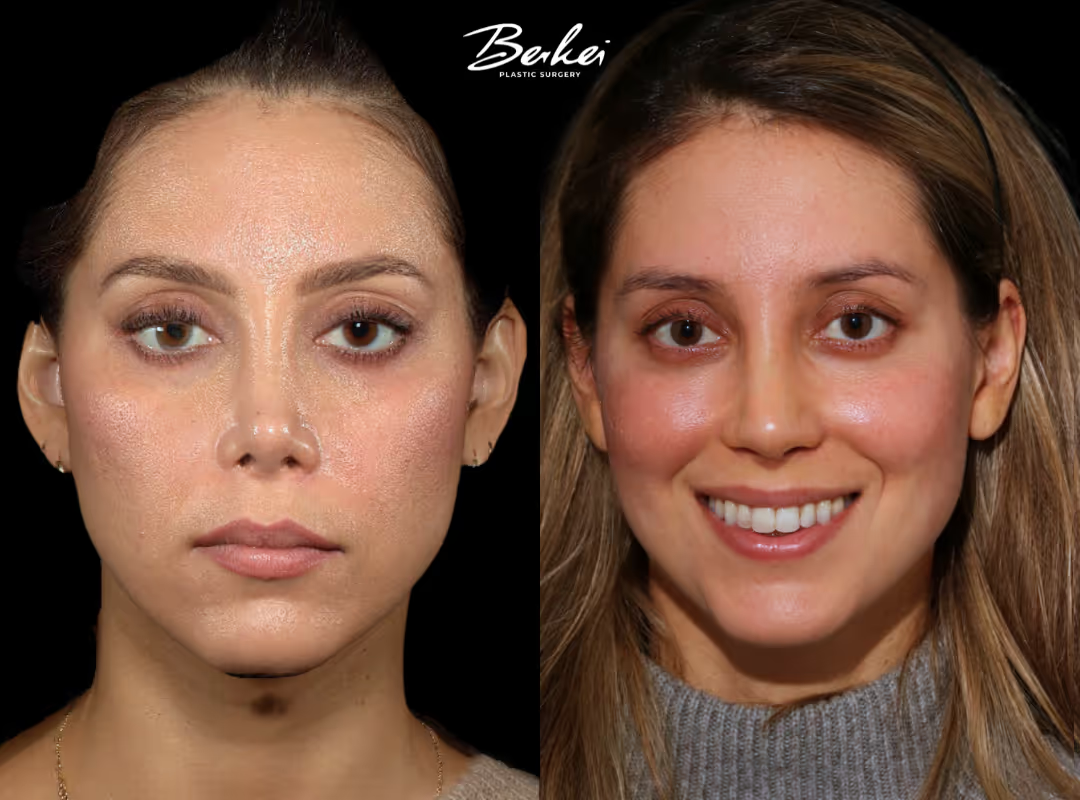
Revision rhinoplasty
Breathe Naturally – Look Natural
Functional reconstruction with attention to aesthetics and individual proportions.
In all these cases, functional restoration and medical indication are the primary focus. However, reconstruction often requires reshaping or repositioning the entire nasal skeleton. As an experienced nasal surgeon, I, Dr. Julia Berkei, ensure that your new nose looks natural and harmonious with your face. The restoration of your breathing is always carried out in harmony with your individual facial proportions.

Specialized in Complex Cases – with Time, Experience, and Empathy
For patients with breathing problems after previous surgeries – we take your history seriously.
We place special emphasis on the careful treatment of patients who have already undergone one or more nose surgeries. Revision procedures with functional impairments are our area of expertise; it is often precisely these cases that require the highest surgical precision and a deep understanding of the internal nasal anatomy. Patients from Zurich who suffer from persistent breathing problems are also warmly invited to schedule a personal consultation at our practice to explore the options for a nose surgery.
FAQ – Frequently Asked Questions About Nose Surgeries
Aesthetic Rhinoplasty
Aesthetic rhinoplasty focuses on form, symmetry, and facial harmony. Functional nasal correction, on the other hand, primarily improves nasal airway patency and breathing. In my Frankfurt practice, I combine both when needed, with the goal of achieving a stable, natural-looking, and permanently functioning result.
Generally from age 18, when bone and cartilage growth of the nose is complete. For serious functional problems or psychological distress, we also consider individual earlier solutions in close consultation with parents.
Depending on the initial findings, the procedure takes between 1.5 and 3 hours. Complex revisions or combined procedures may take longer. The surgical technique is based on over 26 years of experience and enables safe, structured results.
I work almost exclusively with the open technique ("open approach") as it allows maximum precision, especially for complex corrections or revision procedures. The nose is accessed through a fine incision at the columella.
In my practice, you wear the external nasal splint consistently for two weeks, longer than in many other practices. This helps us better stabilize the tissue. Additionally, 6 to 8 follow-up appointments occur within the first two months, during which swelling is monitored and secretions are suctioned, a crucial contribution to complication-free healing.
As with any surgical procedure, there are potential risks such as post-operative bleeding, swelling, bruising, sensory disturbances, or temporary asymmetries. However, through my structured surgical technique, individually adapted safety system, and close follow-up care, we significantly minimize these risks. Complications are absolutely the exception with us.
The risk of infection is extremely low with us (under 0.1%), thanks to a multi-stage hygiene concept:
- During surgery, the nose is disinfected multiple times with sterile solutions
- We administer antibiotics intraoperatively and postoperatively, tailored to your risk and mucosal profile
- In the days after surgery, particularly close monitoring occurs with 6–8 check-ups
- The nasal interior is regularly professionally cleaned and secretions are suctioned to prevent congestion, infections, and wound healing disorders
- You receive clear behavioral recommendations to reduce nasal stress in the first 4 weeks
Through these measures, we achieve an infection-free healing rate of over 99.9%, an exceptionally high value that reflects our specialization and experience.
The external form stabilizes within the first 6–12 weeks, but the final result often only shows after 6–12 months, depending on skin type, tissue thickness, and complexity of the procedure. My surgical technique aims for long-lasting results through targeted cartilage architecture and double internal stabilization.
Depending on the initial situation, complexity, and possible combination with functional measures, we create a transparent cost plan for you. Pure cosmetic corrections must be paid privately; with medical indication (e.g., breathing disorders), part may be covered by private health insurance.
Previous findings, any old surgical reports, photos showing people with your desired nose shape, a list of your expectations and any concerns. The consultation itself is structured, thorough, and empathetic – including digital 3D image simulation.
Functional Rhinoplasty
When you have persistent difficulty breathing through your nose (e.g., due to allergies/dust mite allergy/pollen allergy), are frequently congested (chronic sinusitis/sinus infections), or breathe through your mouth at night, functional correction may be beneficial. Typical causes: deviated nasal septum, enlarged turbinates, unstable nasal valves, post-traumatic deformities.
With proven medical indication, yes, particularly for those with statutory insurance only within contracts with approved clinics. In my private practice, we bill private health insurances. Aesthetic additional measures are generally not reimbursable.
After thorough diagnostics, the procedure is performed under general anesthesia. For example, the nasal septum is straightened, turbinates are reduced, or nasal valves are stabilized. My goal: permanent ventilation, clear breathing, and stability of the external structure, secured by double cartilage strips that have proven effective for decades.
Many patients report a new breathing sensation just days after surgery - freer, quieter, and deeper. The full effect usually develops within the first 6-8 weeks.
Very rarely in my practice. After a nose surgery with me, there is a 99.9% success rate. The risk for revision is therefore very low. Unfortunately, worldwide statistics show that approximately 15-20% of rhinoplasties go wrong. I have specialized in revision procedures as many patients come to me after previous operations. Through planning, technique, and aftercare, our correction rate is under 0.1%.
We clean the nose with fine silicone tubes, monitor healing progress, swelling, sutures, wound status, and internal air circulation. Secretions are regularly suctioned to prevent infections and tension. This close monitoring concept is an essential component of my safety system.
It is a structured combination of:
- Special tissue-preserving surgical technique
- Double-secured architecture of the nasal form through cartilage strips
- Medical protection (antibiotics, cortisone, nasal ointments)
- Concrete behavioral recommendations
- Close follow-up care
Yes. Many of my patients report not only improved breathing but also better quality of life, better sleep, increased concentration, and emotional relief. Particularly for young people who have suffered from their nose's appearance, surgery can provide new confidence and self-esteem.
Because the newly formed nose doesn't look artificial but returns to a familiar, natural proportion. Many say: "I see my old nose again, my childhood nose." This is no coincidence but the result of years of experience and anatomical sensitivity.
Because the second week is crucial for form stabilization, swelling reduction, and cartilage healing. Through my method, the splint becomes part of the safety system - it optimally protects the new structure. Many colleagues remove the splint too early, which can compromise the result.
Skin thickness significantly determines how quickly you see the surgical result. Regardless of skin type, about 70% of the result is visible in my patients after 4-8 weeks. The rest takes time, varying greatly depending on skin thickness.
- Thin skin: 1-2 years
- Medium-thick skin: 2-3 years
- Thick skin (especially at the nasal tip): 4-5 years
Rhinoplasty is a lifelong procedure; patience is part of the healing process.
I specialize in selectively reducing the connective tissue under the nasal tip skin in thick skin cases. I consider the individual vascular network to avoid compromising blood circulation. In over 25 years, I have never had a circulation problem at the nasal tip. Through this technique, I have been able to make the nasal tip up to about 1 cm narrower in patients with very thick skin.
After the procedure, we give you targeted recommendations:
- Anti-swelling medications from day 1 post-op
- Lymphatic drainage from 2 weeks post-op (special massage techniques from week 8)
- Nasal tapes according to our doctors' instructions
- Tips for skin care and scar treatment
- Behavioral recommendations for protection and drainage promotion
This combination leads to slim, clearly defined results, even with thick skin.
During the personal consultation, we first create high-resolution 3D photography of your nose. After the medical examination, Dr. Berkei simulates a millimeter-precise preview of the possible surgical result based on your wishes and anatomical recommendations, directly on the screen. You can photograph the simulation or receive it by email. It helps you better understand your desired profile and shows you what is medically sensible, aesthetically harmonious, and long-term stable to implement.
3D computer simulation is a valuable tool for discussing the desired target image together with you. But: every nose is unique, and every operation also depends on individual anatomical reactions and healing. An experienced surgeon like Dr. Berkei achieves results that usually deviate only minimally from the simulation. The simulation is therefore a realistic orientation but not a mathematical guarantee. It doesn't replace surgical expertise; it complements it.
Yes, within the 3D simulation, Dr. Berkei shows you different nose shapes in direct comparison upon request, e.g., a straight nose versus a button nose with an upturned tip. Important to know: A more curved nose can look very aesthetic in profile, but at the same time, the nostrils are more visible from the front, which you should consider in daily life and in photos. We discuss together which nose shape fits your face, proportions, and style long-term. You shouldn't just decide on a picture but on a profile you'll feel comfortable with for life.
During the personal consultation, we first create high-resolution 3D photography of your nose. After the medical examination, Dr. Berkei simulates a millimeter-precise preview of the possible surgical result based on your wishes and anatomical recommendations, directly on the screen. You can photograph the simulation or receive it by email. It helps you better understand your desired profile and shows you what is medically sensible, aesthetically harmonious, and long-term stable to implement.
Many of my female patients bring celebrities as aesthetic inspiration for a fine, straight, and natural-looking nose whose facial proportions are perceived as particularly harmonious. Frequently mentioned are:
- Grace Kelly – iconic, timeless, perfect symmetry
- Natalie Portman – finely shaped nose with slightly raised tip
- Dua Lipa – modern, elegant, clear nasal line without overcorrection
- Keira Knightley – straight, characterful, yet feminine
- Lily Collins – striking yet delicate
- Zendaya – very natural profile with good relationship to forehead and chin
- Léa Seydoux – typically French: restrained, elegant, unobtrusive
These examples help find a common visual language in the consultation, always with the goal: a result that fits the face and looks natural.
Men also come with very clear aesthetic ideas. Frequently mentioned prominent role models for a straight, masculinely defined nose are:
- Henry Cavill – masculine, strong nasal bridge, very symmetrical
- David Gandy – classically proportioned, straight with clear tip
- Paul Mescal – natural-looking nose with stable profile
- Cillian Murphy – clear edge, slim nasal bridge, striking profile
- Timothée Chalamet – narrow and sensitive, yet strong in expression
- Richard Madden – powerful, balanced, natural
For men, the goal is a natural, inconspicuous change, not an operated look, but a profile that emphasizes character.