



Male hair loss and PRP treatment in Frankfurt — natural support for hair growth



What is male hair loss?
Male hair loss is one of the most common aesthetic changes in men. Many people affected notice the first signs at a young age, such as receding hairlines or a receding hairline. With age, hair can become ever lighter, down to classic baldness in the parietal area.
There are various forms:
- Androgenetic hair loss: The most common cause, also known as “hereditary hair loss.” It is caused by a genetic sensitivity to the hormone dihydrotestosterone (DHT).
- Diffuse hair loss: The hair becomes thinner overall, not just in individual zones. The triggers can be stress, deficiencies or hormonal changes.
- Circular hair loss (alopecia areata): An autoimmune disease in which the immune system attacks the hair roots and creates round bald patches.
What are the causes of hair loss in men?
The exact reasons are manifold: In addition to genetic predisposition, lifestyle, diet or external stress can also play a role. More about that in the next section.
Causes of hair loss in men
The causes of Hair loss in men are versatile. It is often a combination of genetic factors, hormonal influences and external stress.
Genetics & hormones
The most common form is androgenetic hair loss. The hair follicles react sensitively to the hormone dihydrotestosterone (DHT), which is produced from testosterone. This sensitivity is inherited and causes hair to thin over time and eventually fall out.
Lifestyle & diet
Unhealthy diet, nicotine, alcohol, or lack of sleep can have a negative effect on hair growth. Also a lack of certain nutrients, in particular iron, zinc, biotin and vitamin D, is associated with diffuse hair loss. Stress & environmental effects
Severe stress, psychological stress or environmental influences such as pollutants and UV radiation can also disrupt the hair cycle. In such cases, people often speak of diffuse hair loss.

Classic treatment options for hair loss
Who under hair loss suffers, often first resorts to conventional methods to slow down hair loss or stimulate growth. These approaches may be helpful but are often not enough when hair loss is genetic.
Shampoos & care products
In retail, there are numerous Shampoos for hair loss, which are enriched with caffeine, biotin or special active ingredient complexes. They can stimulate blood flow to the scalp and make hair look stronger, but they are no substitute for medical treatment.
Drugs & medicinal ingredients
Certain preparations can inhibit the hormonal effect of DHT on hair follicles or stimulate hair growth. However, they only work as long as they are used regularly and are associated with potential side effects.
Dietary supplements & vitamins
Many affected people try Vitamins against hair loss, such as vitamin D, zinc, or biotin. These nutrients are important for healthy hair roots, but only work when there is actually a deficiency.
Hair transplant
For advanced hair loss, some men rely on a hair transplant. This involves removing hair roots from a dense area (usually the back of the head) and transplanting them into bald areas. This procedure is effective, but costly and requires a healing period.
PRP treatment for hair loss
Die PRP treatment (Platelet Rich Plasma) is a modern, minimally invasive method that uses the body's own healing potential to support hair growth. Especially with male hair loss It is increasingly being used as a natural alternative or supplement to traditional therapies.
What is PRP (platelet-rich plasma)?
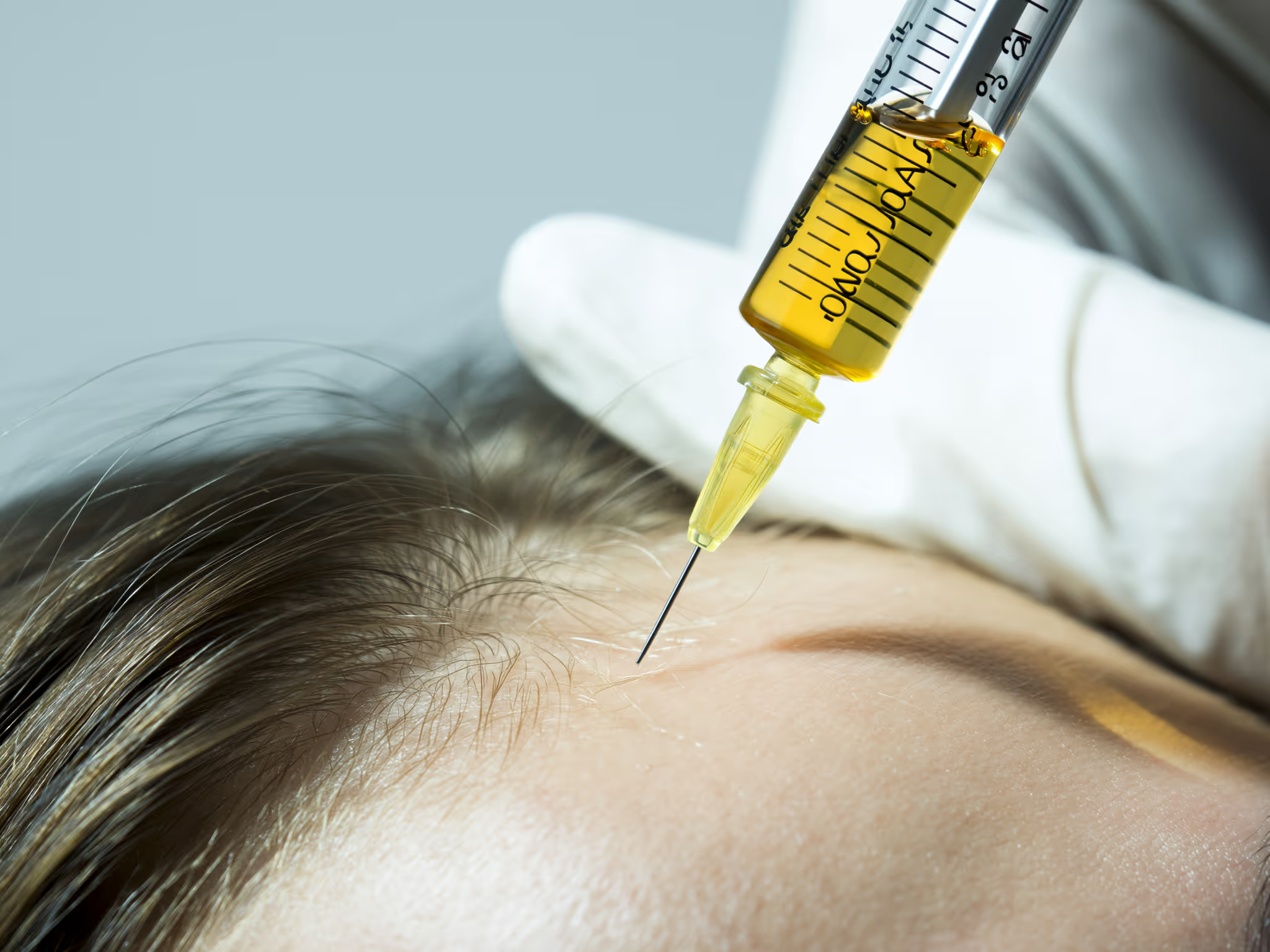
PRP is derived from the patient's own blood. After blood collection, the plasma is processed and concentrated using a special process. This plasma is rich in growth factors, which can stimulate hair follicles and increase blood flow to the scalp.
PRP treatment process
- Blood sampling from the arm vein.
- Preparation of blood in a special centrifuge.
- Use fine needles to inject PRP directly into the scalp at the affected areas.
The treatment takes a total of around 45—60 minutes and can be performed on an outpatient basis.
Experience & study situation
Many patients report a visible thickening of the hair and one slowing hair loss after several PRP sessions. Scientific studies also show positive effects, particularly in the case of androgenetic hair loss.
Possible reactions after treatment
After PRP therapy, slight redness, swelling or sensitivity of the scalp may occur in the short term. Some patients even notice a increased hair loss, which is usually a normal sign that old hair is falling out to make room for new growth.
Results and duration of effect
Die PRP treatment for hair loss Does not work immediately, but develops its effects gradually. Since hair follicles need time to react, patience is required.
- First changes: Many patients report stronger looking hair and less loss after a few weeks.
- Visible results: Usually visible after 3—6 months when new hair grows back and existing hair looks thicker.
- Long-term effect: Regular refreshments can help stabilize the effect over a longer period of time.
- When do you see results after a PRP treatment? → First effects after weeks, more significant results after a few months.
- How long does the effect of a PRP treatment last? → Depending on individual predisposition, hair loss type and lifestyle, in many cases several months to years.
PRP is therefore not a “miracle cure”, but a proven way to promote hair growth and slow down hair loss.
FAQ — Common questions about PRP for hair loss
What really helps against hair loss in men?
There is no one-size-fits-all solution. Depending on the cause, shampoos, medications, nutritional supplements, PRP treatments or a hair transplant may be useful. An individual diagnosis is important in order to choose the right therapy.
What to do against hair loss in men?
A medical examination is the first step. PRP treatments or hair transplants can help with hereditary hair loss, while nutritional deficiencies or stress often play a role in diffuse hair loss.
What to do if hair loss starts as early as 20?
Early hair loss often has genetic causes. Here, it makes sense to start gentle therapies such as PRP at an early stage in order to support hair growth and positively influence the course.
When does hair loss end in men?
Androgenetic hair loss is a progressive process that often lasts a lifetime. Although the pattern stabilizes over the years, there is usually no complete end.
Is PRP an alternative to hair transplant?
PRP can slow hair loss and improve hair quality, but does not replace a transplant if hair loss is very advanced. PRP is also often used concomitant used after a hair transplant to support the result.
Conclusion — PRP as a modern option for male hair loss
Male hair loss can have various causes — from genetic predisposition to hormonal influences to stress or nutritional deficiencies. Traditional treatments such as shampoos or medications are often not enough to stabilize hair growth in the long term.
Die PRP treatment Relies on the body's own regenerative powers and has established itself as a modern, gentle method to activate hair follicles. In our practice in Frankfurt, we usually recommend three sessions, 4—6 weeks apartto achieve optimal results.
The treatment is carried out by our experienced team: Mr. Ahmed Elzebair, Dr. Markus Mulia and Mrs. Livia Berkei. They personally accompany each patient and tailor the therapy individually.
Make an appointment with us now at our practice in Frankfurt am Main and find out how PRP can support your hair quality in the event of hair loss.